While reflexology acts generally on the body’s organs and muscles, nerve-reflexology has the ability to target specific muscles or nerves.
For example, if someone experiences an issue with the quadratus lumborum muscle (a key muscle in the lower back), pressure is applied to the corresponding neuro-reflex point.
Among the 365 identified neuro-reflex points, some are related to nerves — such as the vagus, sciatic, and trigeminal nerves — while others correspond to muscles, including the psoas and trapezius, among others.
Nerve-reflexology and manual neurotherapy are specialized approaches primarily used to address chronic pain.
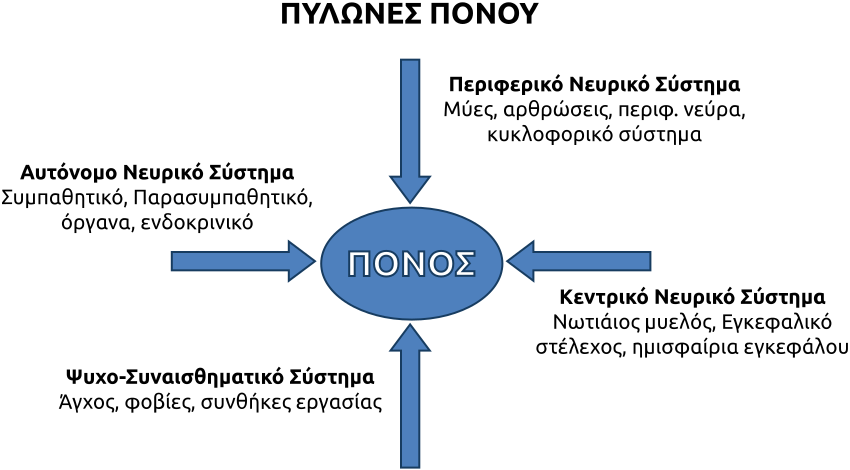
Since dysfunctions of the musculoskeletal and organ systems often appear together, the nervous system — being the body’s central control network — becomes the key focus.
All techniques therefore work in a reflexive way, stimulating the nervous system to restore balance and function.
During an extensive consultation, the therapist gathers information about all functional imbalances in the client’s body.
These may involve the musculoskeletal, organ, endocrine, or nervous systems — often interconnected.
This holistic assessment helps the therapist understand the client’s pain more deeply and identify the connection between dysfunction and pain.
In nerve-reflexology, this approach is referred to as clinical assessment and pain management.
Through this understanding, the therapist is able to design an individualized treatment plan that addresses the client’s unique condition and supports overall well-being.