

Reflexology and Acupuncture for Chronic Pain
A healthy mind can only exist within a healthy body.
Understanding Pain
In 1979, the International Association for the Study of Pain (IASP) defined pain as “an unpleasant sensory and emotional experience associated with actual or potential tissue damage, or described in terms of such damage.” This definition highlights that pain is not only a physical sensation, but also an emotional and psychological experience.
It is important to understand the phenomenon of pain as a whole. Pain is a deeply subjective experience, perceived differently by each individual. The meaning that a person assigns to their pain largely determines how they perceive and respond to it. Therefore, the emotional perception of pain is just as significant as the sensory one. The official definition of pain was established by the International Association for the Study of Pain (IASP) in 1979 as: “An unpleasant sensory and emotional experience associated with actual or potential tissue damage, or described in terms of such damage.”

Understanding Chronic Pain
A patient’s condition is defined as chronic pain when, according to the International Association for the Study of Pain (IASP, 1994):
- There is actual or potential damage to body tissues, or irritation of those tissues.
- It interferes with the individual’s daily life and does not diminish after the expected period of tissue healing — typically lasting several weeks or at least three consecutive months.
- In some cases, chronic pain is linked to a progressive condition, such as arthritis or cancer.
The Psychological and Social Impact of Chronic Pain
In addition to the emotional and social difficulties it can cause, one of the most frequently mentioned concerns among people living with chronic pain — including headaches, neck pain, fibromyalgia, or phantom limb pain — is a noticeable decline in cognitive function.
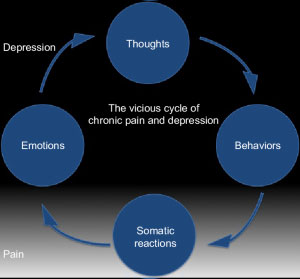
Many studies have shown that chronic pain can cause changes in cognitive functioning, independent of pain intensity. Neuropsychological assessments, sometimes combined with functional MRI (fMRI) scans, reveal that attention, processing speed, memory, and executive skills — including working memory, flexibility of thought, and problem-solving — are often affected.
Over the past few decades, chronic pain has become a growing global health concern. The World Health Organization (WHO) reports that one in five adults aged 40–60 lives with moderate to severe chronic pain. For one in three people, pain limits independence, and for one in four, it disrupts or damages close relationships with family and friends.
Understanding Reflexology and its Role in Managing Chronic Pain
Reflexology is a well-known, non-invasive complementary therapy that uses gentle pressure on specific reflex points, usually on the feet. These precise techniques are thought to stimulate the body’s natural healing processes and support a return to balance and overall well-being.
Studies suggest that reflexology can enhance blood flow and induce relaxation by influencing the autonomic nervous system. Its positive effects may result from both physiological responses (Ernst & Koder, 1997) and psychological mechanisms (Frankel, 1997).
Reflexology is applied as a supportive therapy for managing chronic pain symptoms at the Pain Clinic of Aretaeio Hospital, as well as in various public and private healthcare centers.
Scientific Research on Reflexology for Pain Relief
Here are some of the research studies that have been published on chronic pain.Managing Pain and Disability in Multiple Sclerosis
Various studies have shown encouraging results regarding the use of reflexology for pain management. In a clinical trial with 73 people suffering from Multiple Sclerosis-related pain, ten weeks of reflexology sessions resulted in a 50% reduction in pain levels, and the relief was sustained for up to three months after the treatment ended.
Significant reductions were also observed in fatigue, depression, disability, and spasticity, while participants reported an overall improvement in their quality of life.
Managing Pain in Metastatic Cancer
This study involved 86 patients with metastatic cancer from four hospitals in the northeastern United States. Participants—men and women diagnosed with 16 different types of cancer, including lung, breast, and colorectal—were divided into two groups: 44 received reflexology sessions, while 42 continued their regular medical treatment, supported with extra care and attention from their partners.
A nurse reflexologist instructed the partners of the 44 patients in providing reflexology treatments during their hospital stay. The findings revealed that those who received reflexology experienced a marked decrease in pain and anxiety, whereas the 42 patients in the control group showed no significant improvement.
Managing Lower Back Pain
Lower back pain is among the most common health issues, with eight in ten people experiencing it at some stage in life. The condition is particularly common in professions such as nursing. This study involved 50 male and female nurses suffering from chronic low back pain.
Participants were divided into two groups—one received reflexology, and the other received massage therapy. Each person took part in 40-minute weekly sessions over a two-week period. Pain intensity was assessed using a numerical scale before and after the treatments. Findings revealed a noticeably greater decrease in pain among those who received reflexology compared with the massage group.
References:
e-journal.greureka.teithe.gr
www.psychology.gr
www.psychology.gr
citeseerx.ist.psu.edu
journals.sagepub.com
web.a.ebscohost.com
Hadjistavropoulos, T., & Craig, K. D. (Eds.). (2004). Pain: Psychological perspectives. Mahwah, NJ, US: Lawrence Erlbaum Associates Publishers.
www.ncbi.nlm.nih.gov